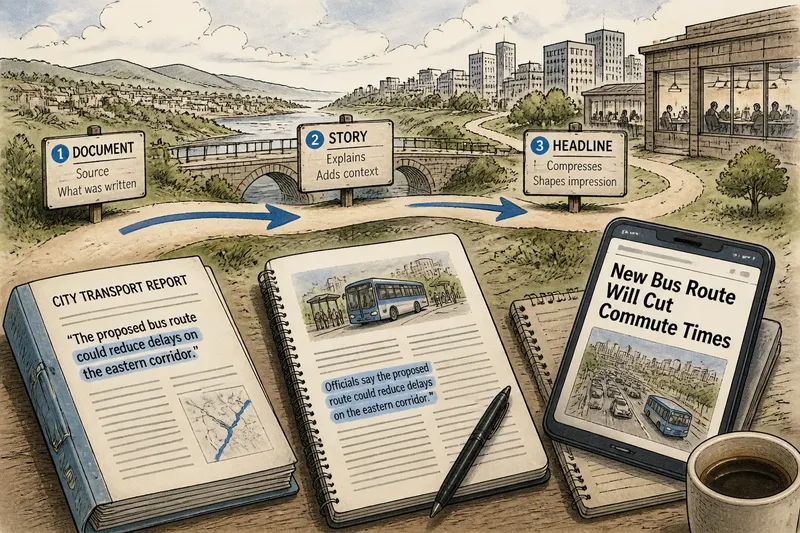
How the Inverted Pyramid Shapes a News Story
The inverted pyramid puts a news story’s central development first. Learn how its order affects context, timelines, and what to read next.
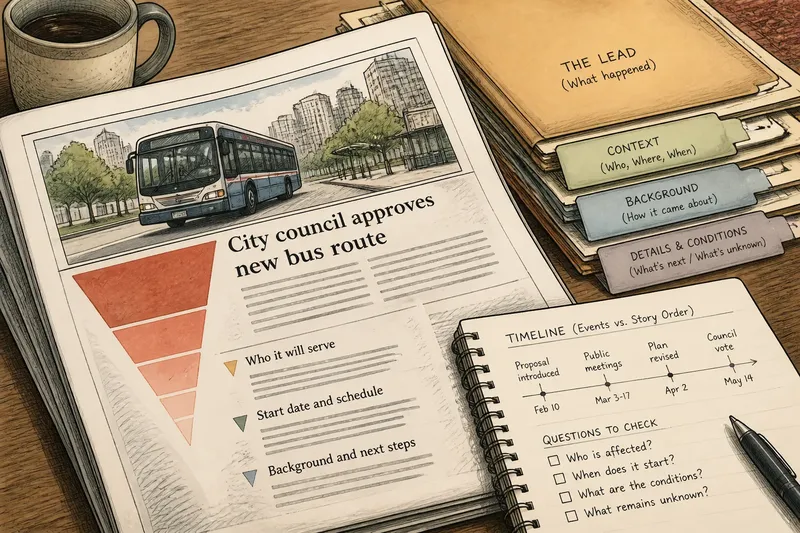
You open a local news story while the kettle warms. The lead says the city council approved a new bus route; the neighborhoods it will serve and the route’s start date appear farther down. That arrangement is the inverted pyramid: the central development comes first, followed by context and narrower details.
The order can help you find the immediate update, but it also shapes what feels prominent. Reading with that structure in mind makes it easier to separate the decision itself from its background, consequences, and unanswered questions.
How Story Order Works
A news report built as an inverted pyramid usually opens with a lead that states the central development. The following paragraphs add details that help explain it: who is affected, what conditions apply, how the decision came about, and what may happen next. Less essential material tends to appear later.
This is an editorial arrangement, not a neutral timeline. The first event in the article may not be the first event in the story. A council vote might lead, while the proposal, public meetings, and revisions that preceded it are described afterward.
Newsrooms have used the form for practical reasons, including the need to organize and edit reports efficiently. Accounts of its historical origins vary, so it is safer to treat any single explanation—such as a particular communication constraint—as one possible influence rather than the definitive cause.
Think of the structure like a labeled folder placed on top of a stack. The label tells you what the papers are about, but you still need to look inside to understand how they fit together.
What the Lead Prioritizes
The lead answers a narrow editorial question: what is the main development in this report? It does not necessarily answer the reader’s next question, such as who pays, which streets are affected, or when a change begins. Those answers may be lower in the story because the writer has ranked the immediate news above its surrounding details.
That ranking can be useful for a discrete update. It can also make a complicated issue seem simpler at first glance. A vote may be the headline event, while the conditions attached to it determine what residents will actually experience.
Say you open a report that a school district has approved a calendar change. The lead states the decision. You want to know whether your child’s school is included and when the new schedule starts, so you scan for the schools named and the effective date. If the report gives no date, the careful conclusion is that the timing remains unclear in this account—not that the change starts immediately.
When Order Hides Sequence
An inverted-pyramid report may give the outcome before showing how events unfolded. A chronological account does the opposite: it moves through events in time, which can make a chain of decisions easier to follow. Neither structure is automatically more reliable; each emphasizes a different relationship among the facts.
When sequence matters, make a small timeline as you read. Note the date or time cue for each event, then distinguish the order of events from the order in which the article presents them. If a report says a plan was revised after public comment, for instance, check what changed and when before treating the revision as a direct result of any one comment.
Watch for cues such as “earlier,” “after,” “following,” and references to meetings or filings. They help reconnect details that the opening has separated from their place in time.
Questions About Story Order?
Does the lead contain the whole story?
No. It usually compresses the central development, while conditions, affected groups, and context may appear later. Continue reading when those details could change what the announcement means for you.
Why might background come later?
The writer may have ranked the latest development above its history or explanation. Look for the earlier events that clarify what prompted the change and what alternatives were considered.
How is this different from chronological order?
The inverted pyramid ranks information by editorial importance, while a chronological account follows events through time. A story may combine both, leading with an outcome and then explaining the steps that preceded it.
What if later details seem to qualify the lead?
Check whether the later paragraph adds a condition, distinguishes a proposal from an approved action, or identifies something still unknown. Those details can narrow the lead’s meaning without changing the reported event.
A Reading Route
Use the opening as a map, then choose the next paragraph based on what you need to understand. For consequences, look for names of affected groups, dates, locations, and conditions. For background, trace what happened before the lead’s event. For a decision that is still unfolding, note what has been approved and what remains pending.
- Check the lead’s subject: If it names an action that has happened, treat it as the reported event; if it describes a proposal, look for who still has authority to approve it.
- Check the affected people or places: If the report names the group or area you care about, use those details to judge relevance; if it does not, keep the scope uncertain rather than assuming everyone is included.
- Check the timing: If an effective date appears, distinguish it from the date of the announcement; if no date appears, look for a later update or an official notice.
- Check the conditions: If approval depends on a stated condition, keep that condition attached to the claim; if the report gives no condition, do not invent one.
- Check the timeline: If earlier events explain how the outcome developed, note their sequence; if the order remains unclear, avoid treating a later event as the cause without support in the report.
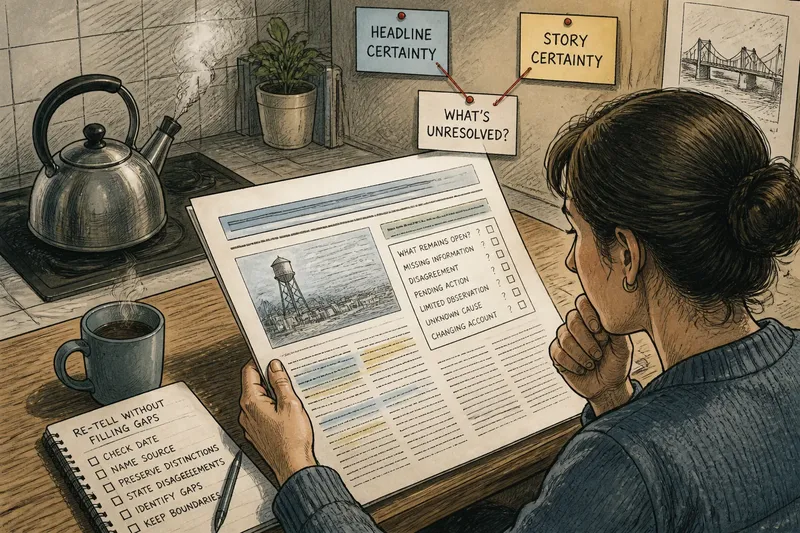
- Check what is still unresolved: If the story identifies a pending decision or unknown effect, treat it as unsettled; if it does not address your question, seek an appropriate official source rather than filling the gap with a guess.
The inverted pyramid helps you locate a report’s main development, but the order also shows what the editor chose to put first. Read beyond the lead when timing, scope, or sequence matters; that is where the article often explains what the opening leaves out.