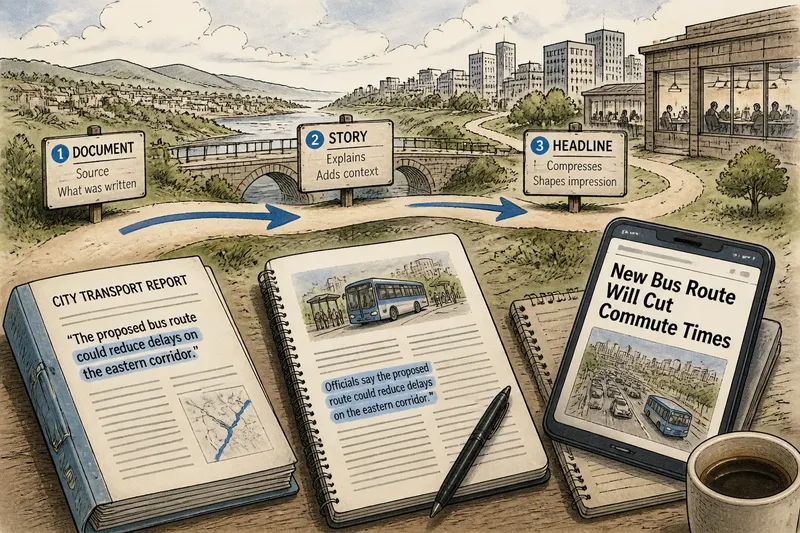
The Headline Sounds Certain. Does the Story?
Compare headline certainty with the report beneath it to spot what is established, what remains unsettled, and how to describe the news fairly.
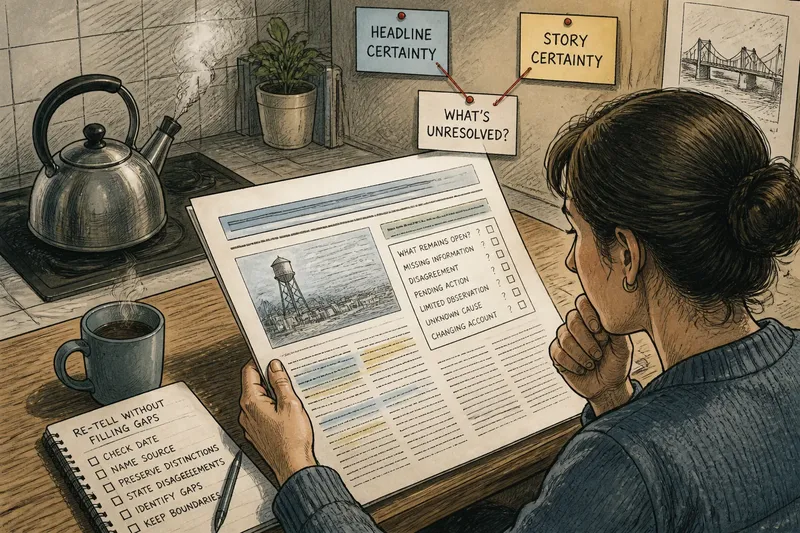
You see “City Water Is Safe” while the kettle heats, then open the story and learn that officials cleared one sample from one location. The headline sounds broader than that update. Comparing headline certainty with story certainty starts with a different question: what does the report leave unresolved?
News can be incomplete without being careless. A decision may be pending, officials may disagree, or a report may name a gap it cannot fill. Reading uncertainty well means keeping those open questions visible instead of treating them as evidence for either side.
What remains open?
Separate what the story says is known from what it says is unknown. The distinction is useful even when the article does not offer a firm answer.
- Missing information: If the report says records are unavailable, treat the point as unverified; look for a later update or the relevant public document rather than guessing.
- Disagreement: If named sources interpret the same event differently, keep both positions attributed; seek the underlying document or observation before adopting either interpretation.
- Pending action: If a decision or inspection has not happened, describe it as pending; check for a later announcement instead of writing as though the outcome is settled.
- Limited observation: If the report describes a specific site or moment, keep your account within that boundary; do not extend it to places or times the story does not cover.
- Unknown cause: If the article reports an outcome but says its cause is unclear, describe the outcome without assigning a cause; wait for evidence that addresses the connection.
- Changing account: If a newer statement revises an earlier one, note the change and its source; use the latest confirmed information while preserving what remains disputed.
These distinctions prevent two opposite errors: turning uncertainty into certainty, and treating an unanswered question as proof that nothing is known.
Track the reporting stage
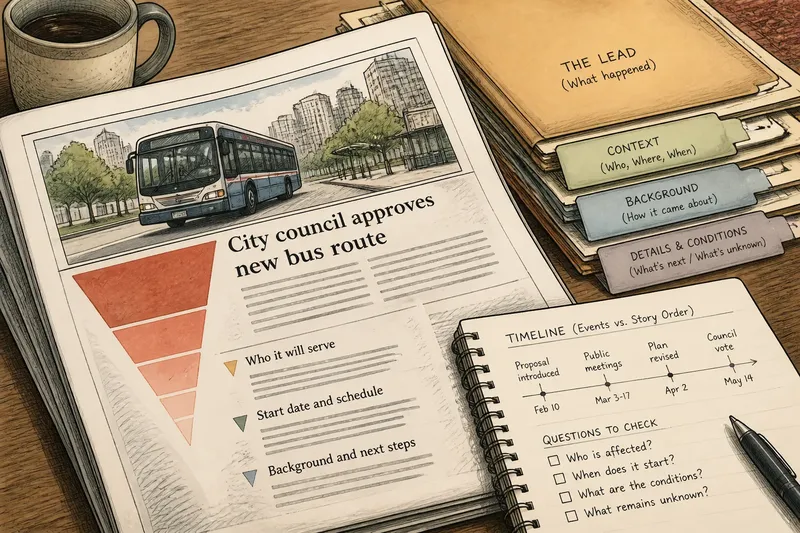
A story can describe an event at different stages: a proposal, a decision, an action in progress, or a result. Those stages are not interchangeable. “Officials plan to reopen the bridge” reports an intention; it does not establish that the bridge has reopened.
Look for verbs and time markers that show where matters stand. Words such as proposed, scheduled, under review, and as of Tuesday can locate a claim in time. If a report is developing, check its update note and date before sharing an older version.
Imagine a town council has approved a temporary bus route, but the transit agency still needs to publish stops and a start date. The article establishes the council’s decision, not that buses are already running. A careful retelling would say the route was approved and its operating details remain pending; the observable difference is that readers are not led to expect service before a schedule exists.
Read uncertainty language
Words like may, appears, and preliminary often mark a boundary, not a lack of reporting. Ask what the word modifies. “The change may reduce delays” leaves the outcome open; “officials may announce a change” leaves the announcement itself uncertain.
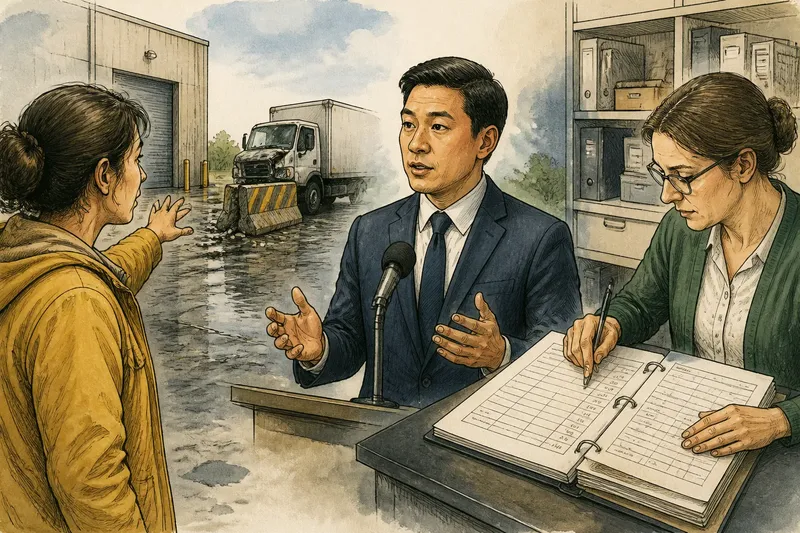
Attribution matters for the same reason. “The agency says the water is safe” tells you who made the claim. It does not settle whether the claim has been independently checked. Keep the source attached to the statement until the story gives you grounds to describe it more broadly.
A small notebook is a useful analogy: a blank line does not tell you what belongs there. Likewise, an unanswered question in a report is a reason to preserve the gap, not fill it with an assumption.
How should uncertainty be read?
Does “may” mean a claim is unreliable?
Not by itself. It signals that the report is not presenting the outcome as certain, so check what evidence and limits the article gives.
What if sources disagree?
Keep each position attached to its source and identify what they disagree about. If the article points to a document or direct observation, consult that material before treating one account as settled.
Can an unanswered question still matter?
Yes. A missing cause or pending decision may change what readers should expect, even when the reported facts remain sound. State the known information and the open point separately.
When should I check for an update?
Check when the story describes a developing event, a scheduled action, or an unresolved investigation. Look for the article’s update note and date, then confirm whether the new information changes the status or only adds context.
Retell without filling gaps
Before repeating a developing or unsettled story, use this compact check:
- If the article gives a date or update note, check whether it is current; if not, find a newer account before sharing.
- If a statement is attributed to a person or agency, name that source in your retelling; if the source is unclear, describe the statement as unverified.
- If the report separates a decision from its implementation, preserve that distinction; if implementation is not confirmed, do not describe the outcome as complete.
- If sources disagree, state what each says; if the evidence does not resolve the dispute, leave the conclusion open.
- If the article names missing records or data, identify the gap; if the material becomes available, revisit the claim rather than assuming what it contains.
- If the report describes a limited place, group, or period, keep those boundaries; if you cannot preserve them in a short post, use narrower wording.
For example, imagine a school district announces that it will review a playground complaint, while the family says the equipment remains unsafe and the district has not released an inspection report. First, separate the established announcement from the family’s attributed concern. Next, note that the inspection record is not yet available, so the report does not resolve the equipment’s condition. If you share the story, say the district has announced a review and the safety question remains open; do not present either the complaint or the announcement as a completed finding. The tradeoff is clear: the wording is less dramatic, but it preserves what readers can and cannot tell from the report.
When you search for headline certainty versus story certainty, the useful answer may be a boundary rather than a verdict. Carry that boundary into your own wording, and readers can see which part is established and which part still awaits an answer.